Choosing interior doors and molding can make or break a remodel by defining flow, style, and functionality from room to room. This guide shows contractors, homeowners, and production professionals how to select door types, core constructions, architectural matches, molding profiles, practical installation tips, and style-enhancing strategies.
You’ll learn about panel, flush, French, barn, pocket, and specialty doors; the trade-offs of solid vs. hollow core; matching doors and trim to traditional, modern, and transitional homes; key molding types and materials; measurement, painting, and budgeting tactics; and how to leverage door and molding choices for soundproofing, resale value, and bold contrast. Along the way, discover why a century-old Atlanta supplier like Cofer Brothers can support your project with expert guidance, custom orders, and quick turnaround.
What Are the Different Types and Styles of Interior Doors?
Interior doors define room boundaries, aesthetic character, and privacy levels by combining design elements like panels, glazing, and sliding hardware to suit any remodel style. Recognizing available door styles enables you to match form and function seamlessly. Understanding these options sets the stage for selecting core construction and finish treatments.
What Are Panel Doors and Their Best Applications?
Panel doors feature frames surrounding recessed or raised panels that add depth and ornamentation, creating a classic appeal. The construction uses rails and stiles to secure decorative panels, enhancing stability and visual interest.
- Five-piece stile and rail frames produce pronounced panel outlines.
- Raised panels add traditional detailing ideal for historic or Colonial homes.
- Flat recessed panels offer a subtle Craftsman look without heavy ornament.
These door patterns deliver timeless elegance in entryways and formal rooms while paving the way to minimalist flush options.
How Do Flush Doors Fit Modern and Minimalist Designs?
Flush doors consist of a simple, flat surface bonded to a frame for a sleek, uninterrupted profile that accentuates modern lines. The mechanism relies on a door slab laminated or veneered over a core, delivering clean aesthetics.
- Wood veneer flush doors maintain natural grain for warm minimalism.
- Painted MDF flush panels create a uniform, uncluttered surface.
- Solid laminate options resist moisture in contemporary baths and laundries.
This streamlined design leads naturally into glazed French door choices that emphasize light transmission.
How Can French Doors Enhance Light and Flow in Your Remodel?

French doors use paired glass-paneled leaves to divide spaces while maximizing daylight and visual connectivity. Their mechanism employs hinged sashes with muntin bars framing glazing, promoting openness.
- Single-panel glass doors expand light in narrow hallways.
- Double-leaf configurations provide grand entry to living and dining areas.
- Exterior French doors blur indoor-outdoor transitions on patios and decks.
By amplifying natural illumination, French doors prepare you to consider space-saving sliding solutions like barn and pocket doors.
What Are the Benefits of Barn and Pocket Doors for Space-Saving?
Barn and pocket doors slide rather than swing, conserving floor space and adding architectural interest. Barn doors use exposed overhead tracks, while pocket doors recess into wall cavities.
- Barn doors create a focal point with exposed hardware and rustic textures.
- Pocket doors disappear into walls for seamless room divisions.
- Soft-close mechanisms prevent slamming in tight quarters.
Sliding doors introduce a functional style variation before exploring specialized louvered, pivot, and custom options.
What Specialty Doors Should You Consider: Louvered, Pivot, and Custom Options?
Specialty doors address unique needs, louvered doors ventilate closets, pivot doors make dramatic entrances, and custom doors match bespoke trim profiles. Their mechanisms and features vary:
- Louvered doors feature adjustable slats for airflow in utility spaces.
- Pivot doors rotate on top and bottom pins for an oversized dramatic swing.
- Custom doors integrate carved panels, curved tops, or exotic wood species.
After deciding on style, the next step is selecting the right core type for performance and budget.
How Do You Choose Between Solid Core and Hollow Core Interior Doors?
Door core construction defines weight, sound control, durability, and cost, influencing privacy and longevity. Choosing between a dense solid core and a lightweight hollow core ensures the right balance of performance attributes for each room’s needs.
What Are the Sound Insulation Benefits of Solid Core Doors?
Solid core doors use a dense engineered wood block or MDF core that blocks noise transmission, improving privacy and comfort. This mass impedes sound waves more effectively than hollow cavities.
- Reduces airborne noise by up to 30 decibels in closed rooms.
- Provides better acoustic separation for bedrooms, home offices, and studios.
- Diminishes hallway echoes and traffic noise in busy homes.
Soundproofing Benefits of Solid Core Doors
Solid core doors are effective at reducing noise transmission, which can improve privacy and comfort within a home. They can reduce airborne noise by up to 30 decibels, making them ideal for bedrooms, home offices, and studios.[1]
Superior insulation leads into examining how core type affects durability and lifespan.
How Do Durability and Longevity Compare Between Solid and Hollow Core Doors?
Solid core doors resist dents, warping, and moisture better than hollow core models, extending service life under heavy use. Hollow core doors rely on a skeletal frame and minimal interior bracing.
| Door Type | Attribute | Value |
|---|---|---|
| Solid Core | Durability | High resistance to impact and moisture damage |
| Solid Core | Weight | Heavier, supports robust hinges and hardware |
| Hollow Core | Durability | Prone to dents and warping under stress |
| Hollow Core | Weight | Lightweight, easier to hang but less sturdy |
Durability Comparison of Door Core Types
Solid core doors are more durable and resistant to damage compared to hollow core doors. They are less prone to dents, warping, and moisture damage, which extends their lifespan, making them a better investment for high-use areas.[2]
How Do You Match Interior Doors and Molding to Your Home’s Architectural Style?
Aligning door and trim styles with architectural themes ensures a cohesive aesthetic that honors your home’s character. Proper pairing of profiles, finishes, and proportions brings harmony from hallway to kitchen.
What Trim and Door Styles Suit Traditional Homes Like Colonial, Craftsman, and Victorian?
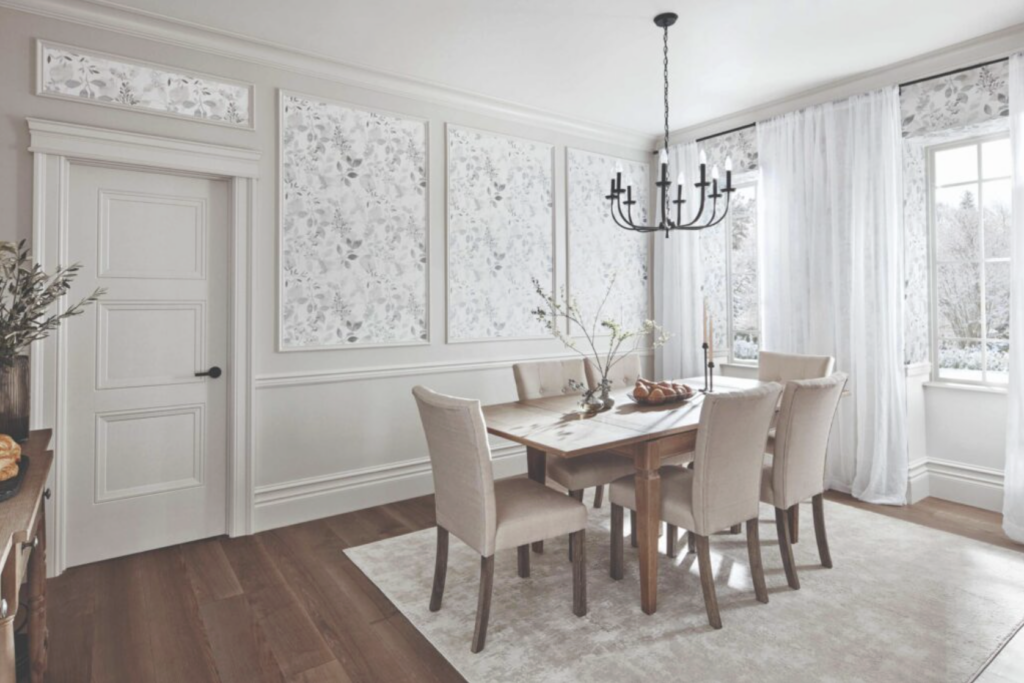
Traditional homes call for raised-panel doors and ornate casing profiles that echo period details. Colonial trim features crown moldings and rosettes, while Craftsman casing uses flat boards and plinth blocks.
- Colonial: Six-panel doors with egg-and-dart or dentil crown molding.
- Craftsman: Flat stile-and-rail doors with wide casing and square rosettes.
- Victorian: Carved panel doors with layered baseboards and crown assemblies.
Matching Doors and Trim to Architectural Styles
The article suggests that traditional homes like Colonial, Craftsman, and Victorian styles benefit from raised-panel doors and ornate casing profiles. These details echo the period’s design elements, creating a cohesive and historically accurate aesthetic.[3]
How to Choose Doors and Trim for Modern and Contemporary Home Styles?
Modern designs favor minimal detailing, flush panels, and simple casings that recede into walls. Slim baseboards and square-edged casings support a clean, streamlined aesthetic.
- Use flush slab doors with hidden hardware for uninterrupted surfaces.
- Select narrow, square casing profiles that align flush with drywall.
- Apply low-profile baseboards of 3–4 inches in height to maintain scale.
This minimalist approach transitions easily into the balanced blends of transitional design.
What Is Transitional Design and How Does It Blend Door and Trim Styles?
Transitional style mixes traditional proportions with modern simplicity to create flexible, timeless interiors. It pairs raised-panel doors with streamlined casings for an updated yet familiar look.
- Combine shaker panel doors with uncluttered casing and baseboard.
- Use mid-tone wood stains on doors with painted white trim.
- Incorporate modest crown molding to echo classic roots without excess.
Understanding blending strategies leads to deciding if and how doors and trim must match.
Do Interior Doors and Trim Have to Match? How to Use Color and Finish for Cohesion or Contrast?
No, interior doors and trim do not have to match exactly; strategic contrasts can highlight architectural features while matching creates unity. Finish selection influences visual flow and focal emphasis.
- Paint doors and trim the same color for seamless continuity.
- Stain doors darker than surrounding trim to frame openings.
- Use bold trim color against neutral doors for dramatic accents.
Visual harmony with trim and door choices prepares you to explore molding fundamentals.
What Are the Key Types, Materials, and Profiles of Interior Molding for Your Remodel?
Molding frames doors, floors, and ceilings, adding dimensional detail that anchors design themes. Selecting appropriate profiles and materials transforms plain openings into architectural statements.
What Are the Differences Between Mitered and Butted Door Casing Styles?
Mitered casing uses angled joints for continuous lines around openings, yielding a refined, formal appearance. Butted casing employs square cuts with butt joints and rosettes for easier installation and a vernacular look.
- Mitered joints create crisp 45° corners requiring precise cutting.
- Butted joints use flat stock with decorative blocks to finish corners.
- Rosettes and plinth blocks enhance butted casing in traditional contexts.
Profile selection then extends to baseboard and crown moldings.
How Do Baseboard and Crown Molding Complement Door Trim?
Baseboard and crown molding establish a layered framework that balances door casings and ties room proportions together. Baseboards protect walls, while crown adds vertical interest at ceiling junctions.
- Baseboard heights of 4–6 inches match door casing scale.
- Crown molding depths of 3–5 inches create an overhead frame.
- Coordinated profiles echo casing shapes for visual consistency.
Material choice impacts durability, cost, and ease of finishing.
Which Molding Materials Are Best: Wood, MDF, PVC, or Polystyrene?
Different materials offer varied benefits in stability and finish options. Choose wood for authenticity, MDF for smooth painting, PVC for moisture resistance, and polystyrene for lightweight decorative trim.
| Material | Durability |
|---|---|
| Wood | High wear resistance |
| MDF | Smooth painted finish |
| PVC | Water and rot resistant |
| Polystyrene | Lightweight and easy |
What Are the Latest Trends in Decorative Molding and Their Impact on Design?

Contemporary molding trends blend geometric patterns, layered profiles, and minimalist accents to modernize traditional details. Designers use molding as a focal art piece rather than a hidden finishing touch.
- Geometric ceiling coffers create three-dimensional interest overhead.
- Layered flat moldings form linear art installations on walls.
- Minimalist shadow gaps produce subtle floating panel effects.
Trend insights guide practical installation and finishing recommendations.
What Practical Tips Ensure a Cohesive Interior Door and Molding Look?
Ensuring precise measurements, proper installation methods, and coordinated finishes is critical for a polished outcome. Successful execution depends on preparation, technique, and quality controls.
How Do You Measure Accurately for Doors and Trim?
Accurate measurements prevent gaps, misalignments, and rework by capturing slab size, jamb depth, and casing clearances in advance.
- Measure rough opening width, height, and diagonal for square.
- Record slab thickness and jamb depth for hinge and hardware specs.
- Confirm flooring thickness to set casing reveals and baseboard height.
These steps minimize adjustments and flow into contractor installation considerations.
What Installation Considerations Should DIYers and Contractors Know?
Proper installation ensures plumb, square, and secure door and molding assemblies that operate smoothly and look uniform.
- Shim jambs at hinge locations to maintain plumb alignment.
- Use galvanized finishing nails to prevent rust and staining.
- Install casing before paint to allow consistent caulking coverage.
Installation success leads to detailed painting and finishing strategies.
How to Paint and Finish Doors and Trim for a Polished Appearance?
Quality finishes protect surfaces, unify color schemes, and highlight profile details through consistent priming, sanding, and topcoats.
- Prime raw wood or MDF with stain-blocking primer.
- Lightly sand between coats to ensure adhesion and smoothness.
- Apply two finish coats with a high-quality small-nap roller or fine brush.
A refined finish naturally transitions into budgeting considerations for the remodel.
How Can You Use Interior Door and Molding Choices to Enhance Functionality and Style?
Strategic door core, trim color, and profile selections boost privacy, resale value, and highlight architectural details to elevate both practicality and aesthetics. Thoughtful choices reinforce overall design objectives.
How Do Door Core Types Affect Soundproofing and Privacy?
Solid core doors provide superior mass to block noise, while hollow core doors serve secondary spaces where economy and ease of installation matter more.
- Solid core doors block up to 30 decibels for private spaces.
- Hollow core doors suffice for closets, pantries, and infrequent-use rooms.
- Acoustic seals and door sweeps further enhance performance.
Enhanced functionality dovetails with investment considerations in resale value.
What Role Does Door and Trim Selection Play in Home Resale Value?
High-quality doors and well-executed trim signal craftsmanship and attention to detail, appealing to prospective buyers and commanding higher offers.
- Solid wood panel doors suggest durability and premium finishes.
- Coordinated trim packages demonstrate design consistency.
- Custom profiles convey uniqueness and homeowner investment.
Aesthetic impact connects directly to opportunities for bold contrasting color applications.
How to Incorporate Contrasting Colors to Highlight Architectural Details?
Contrasting door and trim colors transform openings into focal accents, guiding the eye and reinforcing style narratives.
- Dark doors against light walls emphasize entrances and thresholds.
- Painted trim in complementary hues frames door details.
- Two-tone walls and trim create visual layers around openings.
Strategic contrast choices lead into finding local expert support and resources.
Where Can You Find Expert Guidance and Quality Interior Doors and Molding in the Atlanta Metro Area?
Local expertise ensures product selections suit regional architecture, climate, and building codes, backed by knowledgeable staff, custom capabilities, and rapid turnaround support.
Why Choose Cofer Brothers for Interior Doors and Molding?
Cofer Brothers supplies a century of building material expertise, offering diverse door styles, core options, and molding profiles with custom order flexibility.
- Extensive product range in wood, MDF, PVC, steel, and fiberglass.
- Expert staff guidance to navigate complex style and performance decisions.
- Over 100 years serving Atlanta contractors, homeowners, and production professionals.
- Quick-turnaround shop capabilities for time-sensitive projects.
Family-owned reliability leads into understanding Atlanta’s unique style influences.
How Does Local Expertise Influence Door and Trim Selection for Atlanta Homes?
Decades of local service give Cofer Brothers insight into Atlanta’s historic bungalows, Craftsman cottages, and contemporary urban builds, ensuring authentic style matches.
- Knowledge of common regional wood species and moisture considerations.
- Familiarity with local historical commission trim standards.
- Awareness of climate-related finish and material performance.
Customized solutions and timelines set the stage for understanding shop services.
What Are the Benefits of Custom Orders and Quick Turnaround Services?
Custom orders allow precise door heights, panel configurations, and specialty moldings, while in-house shops deliver many orders within 48 hours.
- Tailored sizes and panel details for unique openings.
- Private label staining and pre-finish options.
- Rapid delivery to meet tight remodeling schedules.
To start your project, reach out or visit Cofer Brothers using the contact details below.
How to Contact or Visit Cofer Brothers for Your Remodel Needs?
Speak with experienced staff or schedule a showroom visit at Cofer Brothers Contact Page to discuss your interior door and molding requirements.
Remodeling with the right interior doors and molding transforms your space by unifying style, function, and craftsmanship. Thoroughly explore door styles, core options, architectural matches, and molding profiles while adhering to measurement, installation, and finish best practices.
Leveraging Cofer Brothers’ century-long expertise, local insight, custom capabilities, and rapid turnaround ensures your project achieves a cohesive, high-value outcome. Partner with their team to select optimal materials and create a remodel that stands the test of time.
[1] “Understanding Sound Transmission Class (STC) Rating,” Acoustical Surfaces, Inc. (2023)
[3] “Architectural Styles: A Visual Guide,” Margaret Fletcher (2020)