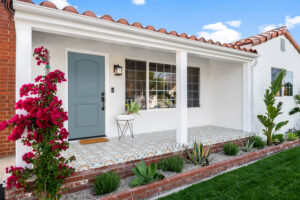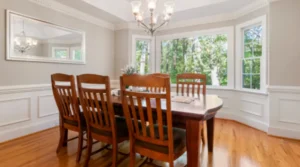
Trim profiles set the tone for a room. Traditional homes look best with detailed profiles. Modern homes need simpler lines. The key is matching your home style and keeping trim consistent within each space. Bring a sample if you are matching existing trim.
Trim does more work than most people realize. It covers gaps. It frames doors and windows. It finishes the transition between walls and floors. But it also shapes how a room feels.
The wrong profile can make a room look off. The right one pulls everything together.
Most homeowners think about trim when they are also choosing interior doors. That is the right time to think about it. The choices you make now will be in your house for decades.
Cofer Brothers stocks hundreds of profiles. Walking into our showroom, you will see a wall of options. That can feel overwhelming. But the decision is simpler than it looks once you know what to consider.
What Is a Trim Profile?
A profile is the shape of the trim when you look at it from the end. Some profiles are flat and simple. Others have curves, grooves, and layers of detail.
The profile affects how the trim catches light. It affects how formal or casual the room feels. Two pieces of trim can be the same size but look completely different because of the profile.
Common trim types include baseboard, door casing, crown moulding, chair rail, and window trim. Each type comes in many different profiles.
How Does Home Style Affect Profile Choice?
Your home has a style. The trim should match it.
Traditional and Colonial Homes
Traditional homes in Druid Hills and similar neighborhoods often have detailed profiles. These profiles have curves, steps, and layers. They catch light in interesting ways and feel formal.
Common choices include colonial casing with multiple curves and crown moulding with dentil details or built-up layers.
Best for: Homes built before 1960. Formal rooms. Dining rooms and living rooms where you want a classic look.
Craftsman Homes
Craftsman style uses simpler shapes with clean lines. The profiles are often flat or have only subtle curves. The look is handmade and honest rather than fancy.
Common choices include flat casing with a small backband and baseboard with square edges and minimal detail.
Best for: Bungalows. Arts and Crafts style homes. Rooms where you want warmth without fuss.
Modern and Contemporary Homes
Modern homes use the simplest profiles. Square edges. Flat faces. No curves or ornament.
Common choices include flat stock, square-edge baseboard, and minimal or no crown moulding.
Best for: New construction with clean lines. Minimalist spaces. Homes where the architecture is the focus.
Do all trim in a House Need to Match?
No. But it needs to be consistent where it matters.
Trim should match within each room. If you can see two rooms at the same time, the trim in both should work together. Hallways that connect rooms should flow without jarring changes.
Different parts of the house can have different trim. A formal living room might have more detailed profiles than a basement or utility room. That is normal.
What looks wrong is mixing very different profiles in the same sightline. A modern flat casing next to colonial crown moulding will always feel off.
What Materials Do Trim Profiles Come In?
Most trim comes in MDF, finger-jointed pine, or solid wood.
MDF Trim
MDF is made from wood fibers pressed together. It paints smoothly with no grain showing through. It costs less than solid wood.
MDF works well for painted trim in bedrooms, living rooms, and hallways. It does not handle moisture well. Avoid it in bathrooms, basements, and anywhere that gets wet.
Best for: Paint-grade trim. Budget-conscious projects. Smooth finishes.
Finger-Jointed Pine
Finger-jointed pine is made from small pieces of pine glued together. It is more stable than solid pine and costs less.
It paints well and handles some moisture better than MDF. It is a good middle option for most projects.
Best for: Painted trim in any room. Projects where you want real wood without the cost.
Solid Wood
Solid wood includes pine, poplar, and oak. Pine and poplar are often used for painted trim. Oak is usually stained.
Solid wood can be stained to show the grain. It feels more substantial than MDF. It costs more and may show grain through paint unless properly primed.
Best for: Stain-grade trim. High-end projects. Historic restoration.
What If I Need to Match Existing Trim?
Older homes in Decatur, Avondale, and Kirkwood often have trim profiles that are no longer standard. Matching them takes some work.
Start by bringing a sample. Even a short piece helps. Our team can compare it to what we stock. Many older profiles are still available or have close matches.
If we do not have an exact match, we can sometimes find something close enough that the difference will not show. Other times, custom milling is the answer.
The goal is getting close enough that no one notices where old meets new.
How Do I Know Which Profile Looks Right?
The best way is to see samples in person. Photos do not show how profiles catch light or how the scale feels in a real room.
Hold the sample against your wall. Look at it from across the room. Check it at different times of day when the light changes.
If you are unsure, start with something classic rather than trendy. Simple profiles age well. Very detailed profiles can feel dated if tastes change.
How Can Cofer Brothers Help?
We stock hundreds of trim profiles in wood, MDF, and primed options as part of our building materials inventory. Our showroom in Tucker has samples you can see and hold.
Our team knows which profiles work for different home styles. We can help you find options that match your existing trim or suggest profiles that fit your project.
If you are working on multiple rooms, we can help you plan so that everything looks right together.
Stop by our Tucker location and bring a sample if you have one. We are happy to walk through the options and help you find what works.
What Should You Do Next?
If you are starting a trim project, take a few minutes to look at what you already have. Notice the profiles on your baseboards, door casings, and crown moulding, if you have any.
Take a photo or bring a sample when you visit. That gives us a starting point.
We will help you find profiles that match your home and your budget. Give us a call or stop by when you are ready.
FAQs
How do I choose the right trim profile for my home?
Start by looking at your home style. Traditional homes work well with detailed profiles that have curves and layers. Modern homes look best with simple, square-edge profiles. If you are matching existing trim, bring a sample to compare. The profile you choose should match the style of your home and work well with the other trim in the same room.
Should all trim profiles in my house match?
Trim does not have to match exactly throughout your whole house. But it should be consistent within each room and in connected spaces you can see at the same time. Baseboards, door casing, and crown moulding in the same room should feel like they belong together, even if they are not identical.
What is the difference between MDF and wood trim profiles?
MDF trim paints smoothly and costs less than solid wood. It works well for painted trim in most rooms. Wood trim can be stained to show the grain and feels more substantial. Wood is better for stain-grade projects and high-end finishes. MDF does not handle moisture well, so avoid it in bathrooms and basements.