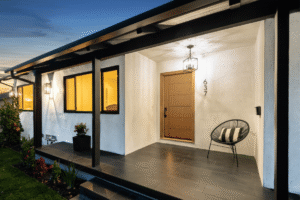
The right size baseboard depends on three things: your ceiling height, your room size, and your home’s style. In the Atlanta market, 5-1/4 inch speedbase is the most common baseboard and works well with the standard 8-foot ceiling. 9-foot ceilings call for 5 to 7 inches. 10-foot ceilings or higher look best with 7 inches or more. Proportion matters more than personal preference. Get it wrong, and the room looks off, even if you cannot say why.
Why Does the Size of Your Baseboard Matter?
Baseboards do more than cover the gap where your wall meets the floor. They frame the room. They balance the ceiling height. They tie the trim, doors, and casing together.
When the size is right, you do not notice the baseboard. The room just feels finished. When the size is wrong, something feels off. Short baseboards in a tall room look like they ran out of material. Tall baseboards in a small room with low ceilings make the space feel boxed in.
Most homeowners do not think about baseboards until they are standing in the trim aisle or looking at a quote. By then, it is easy to default to whatever the builder used. That is usually the cheapest, smallest option available. It works, but it rarely looks intentional.
A few extra inches of baseboard height is one of the simplest upgrades you can make. It costs more in material but very little in labor. The visual difference is bigger than people expect.
What Size Baseboard Works With Your Ceiling Height?
Ceiling height is the biggest factor. The taller the ceiling, the taller the baseboard should be.
- 8-foot ceilings: 5-1/4 inch speedbase is the standard. It works in almost every room and looks more intentional than a builder-grade 3-inch baseboard.
- 9-foot ceilings: 5 to 7-inch baseboards. You can stay with 5-1/4 inch if you want a consistent look across the home, or step up to 6 or 7 inches for more presence.
- 10-foot ceilings or higher: 7 inches or more.

5-1/4″ Speedbase Pictured Above
The general guideline carpenters use is that baseboard height should be roughly 1/18 to 1/20 of the ceiling height. So a 9-foot ceiling (108 inches) lands around 5 to 6 inches of baseboard. A 10-foot ceiling stands around 6 to 7 inches.
You can go taller than these ranges if your home style supports it. Older Decatur and East Lake homes with original 10 or 11-foot ceilings often had baseboards 8 inches or taller. That was standard for the period. Going short on those rooms makes the baseboards look like a mistake.
What Size Baseboard Fits Your Home’s Style?
Style matters almost as much as ceiling height. The baseboard should look like it belongs to the house, not pasted on.
Craftsman and Bungalow homes typically use taller, simpler baseboards. Flat or slightly stepped profiles. Often 5 to 7 inches tall. The look is clean and substantial without being fussy.
Victorian and older traditional homes often used very tall baseboards, sometimes 8 to 10 inches. Profiles were more decorative with curves, beads, and stepped tops. If you have an older home with original trim, match what is already there.
Modern and contemporary homes with modern interiors often use shorter, square-edge baseboards. Sometimes only 2 to 3 inches. The point is to make the trim almost disappear. Some modern homes skip baseboards entirely and use a reveal at the floor instead.
Standard suburban homes built in the last 30 years have 8 or 9-foot ceilings and a mix of styles. A 5-inch baseboard with a simple, slightly profiled top is a safe choice. It looks more intentional than a 3-inch builder-grade baseboard but does not feel out of place.
How Should Baseboard Size Match the Rest of Your Trim?
Baseboards do not exist on their own. They need to look right next to the door casing, window casing, and any crown moulding in the room.
A few simple rules help.
- The baseboard should usually be taller than the door casing is wide. A 5-inch baseboard pairs well with a 3 to 3.5-inch door casing.
- If you have crown moulding, the baseboard should be at least as tall as the crown, ideally a bit taller. Tall crown with short baseboards looks top-heavy.
- Profiles should feel related. Decorative baseboards with simple flat casing can clash. Either keep everything simple or commit to a more detailed look throughout.
When in doubt, hold a sample piece against the door casing and look at it from across the room. The eye picks up proportion problems faster than a tape measure.
What Are the Most Common Baseboard Mistakes?
Most baseboard regrets come from a handful of patterns.
Buying based on the showroom photo. Trim looks different in a small sample than across a 200-square-foot room. Bring samples home and tape them up before ordering.
Going too short. Builder-grade 3-inch baseboards are the most common default. They almost always look small in rooms with 9-foot or higher ceilings.
Mixing too many profiles. Different baseboard styles in adjoining rooms make a home feel choppy. Pick one for the main living areas and keep it consistent.
Ignoring the door casing. Baseboards and casing have to terminate against each other. If the baseboard is taller than the casing is thick, you need to plan how they meet. A plinth block at the base of the door is a clean solution.
How Can Cofer Brothers Help?
We carry a full selection of trim and moulding, including baseboard, casing, and crown in MDF, finger-jointed pine, and solid wood. We can match common profiles or quote a custom run if you are working in an older home with trim that is no longer made.
If you are not sure what size baseboard fits your room, bring photos and your ceiling height in. Our team can talk through proportions, profile options, and what works with the rest of your trim. We will help you avoid the most common mistakes before you order.
For homes in older Atlanta neighborhoods, we often see customers trying to match original trim that is decades old. We can help you get close, whether that means stocking a similar profile or running a custom match.
What Should You Do Next?
Measure your ceiling height and the width of your existing door casing. Note the style of your home and any trim you want to keep or match. Bring those notes in or send them over.
We can show you samples in the right sizes and help you pick a profile that fits your home and your taste. No pressure. Just a conversation about what works.
Stop by or give us a call when you are ready to look at options.
Related Articles
- How Do I Choose the Right Trim Profile for My Project?
- 5 Interior Trim Upgrades That Instantly Elevate Atlanta Homes
- How do you choose the perfect interior doors and molding for a remodel?
- How To Install Baseboards
FAQs
What size baseboard works best with 8-foot ceilings?
For 8-foot ceilings, a 5-1/4 inch speedbase is the most common choice in the Atlanta market and a strong default. It looks more intentional than a 3-inch builder-grade baseboard without feeling oversized. Going much taller than 5-1/4 inches in a room with 8-foot ceilings can make the space feel cramped.
Should baseboards be taller than door casing?
Yes, baseboards should generally be taller than the door casing is wide. A 5-inch baseboard pairs well with a 3 to 3.5-inch door casing. This keeps the proportions balanced and helps the trim look intentional. If your baseboard is much taller than the casing, a plinth block at the base of the door creates a clean transition.
How do I pick a baseboard size for an older home?
Older homes often have original baseboards 6 to 10 inches tall. If your goal is to match the period, measure what is already there, and find a similar profile. If the original trim is gone, choose a height that fits the ceiling height, usually 5 to 7 inches for 9-foot ceilings and 7 inches or more for 10-foot ceilings. A local supplier can help match older profiles or quote custom milling.u003cbru003e