Low-E glass has a coating that reflects heat and blocks UV rays. In Georgia summers, it keeps your home cooler and reduces AC costs. Most new windows include Low-E standard. For better performance, upgraded coatings like Low-E 366 block more heat while letting in more light. The energy savings add up over time.
If you are shopping for replacement windows, you have probably seen Low-E glass listed as an option. Sometimes it is included. Sometimes it costs extra.
Low-E stands for low emissivity. In plain terms, Low-E glass has a thin coating that reflects heat instead of letting it pass through.
For homeowners in Sandy Springs, Dunwoody, and across Metro Atlanta, this matters. Our summers are hot. Anything that keeps heat out of the house makes a difference in comfort and energy bills.
What Does Low-E Glass Actually Do?
Low-E glass has a microscopic metallic coating on one surface. You cannot see it or feel it. But it changes how the glass handles heat.
Regular glass lets heat pass through in both directions. In summer, heat from outside enters your home. In winter, heat from inside escapes. Your HVAC system works harder to compensate.
Low-E glass reflects heat back toward its source. In summer, it reflects heat back outside. In winter, it reflects heat back inside. This reduces heat transfer through the window.
The coating also blocks most UV rays. UV light fades furniture, flooring, hardwood, and fabrics over time. Low-E glass reduces this damage without making rooms darker.
Best for: Any home in a hot climate. Standard on most quality windows today.
How Much Does Low-E Glass Cost?
The cost depends on whether Low-E is standard or an upgrade.
Most quality vinyl windows and aluminum-clad windows include Low-E glass as a standard feature today. You pay for it either way, but it is built into the base price.
Some budget window lines still treat Low-E as an optional upgrade. The upcharge varies by manufacturer and coating type.
When comparing window quotes, always confirm whether Low-E is included. Two windows at different prices might be closer in value once you account for the glass type.
Are There Different Types of Low-E Coatings?
Yes. There are different coating technologies, and the differences matter for Georgia homes.
Hard-Coat vs Soft-Coat Low-E
Hard-coat Low-E is baked into the glass during manufacturing. It is durable and less expensive. It works better in cold climates where you want some solar heat to enter during winter.
Soft-coat Low-E is applied after the glass is made. It goes on an interior surface of a double-pane unit where it is protected. Soft-coat blocks more solar heat and works better in hot climates like Georgia.
Most windows sold in our area use soft-coat Low-E.
Low-E 270 vs Low-E 366
You may see specific product names like Low-E 270 and Low-E 366 when comparing windows. These are Cardinal Glass products used by many window manufacturers.
| Feature | Low-E 270 | Low-E 366 |
| Silver layers | Two | Three |
| Heat blocking | Good | Better |
| UV protection | Good | Better |
| Visible light | Standard | More light |
| Cost | Lower | Higher |
| Best for | Budget projects | Best performance |
Low-E 270 blocks heat and UV rays effectively and costs less. For many homes, it performs well and keeps costs down.
Low-E 366 blocks more solar heat while letting in more visible light. Rooms stay cooler without feeling darker.
In Georgia, Low-E 366 offers better performance for our hot summers. The tradeoff is cost. Low-E 366 typically adds to the window price, but the improved comfort and energy savings often make it worthwhile.
Does Low-E Glass Really Save Money?
Yes, but the amount varies.
Low-E glass reduces heat transfer. In a hot climate like Georgia, that means your AC runs less during summer. Less runtime means lower energy bills.
The exact savings depend on several factors. How many windows you replace. How efficient your current windows are. How well insulated the rest of your home is. The type of Low-E coating used.
Most homeowners notice comfort first. Rooms with new Low-E windows feel cooler in summer and warmer in winter. Over time, the energy savings typically offset the cost of the upgrade.
Which Windows Come with Low-E Glass?
Most vinyl windows and aluminum-clad windows include Low-E glass standard today. This includes brands like Ply Gem, JELD-WEN, and ViWinTech.
Some entry-level or builder-grade windows still offer Low-E as an upgrade. Always confirm what is included before you order.
If you are replacing older single-pane windows, almost any new double-pane window with Low-E will be a significant improvement.
What About Natural Light?
Some homeowners worry that Low-E glass will make rooms darker. This is mostly a myth.
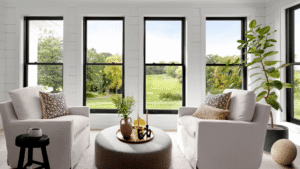
Modern Low-E coatings block heat and UV rays, not visible light. Rooms still get plenty of natural light. Most people cannot tell the difference between Low-E and regular glass just by looking.
Some Low-E windows have a slight tint. Low-E 366 actually lets in more visible light than Low-E 270 while blocking more heat.
How Can Cofer Brothers Help?
We offer windows from Ply Gem, JELD-WEN, ViWinTech, and other trusted brands. Most include Low-E glass standard.
Our team can help you compare options and understand what each quote includes. We see a lot of window quotes that look different on paper but are actually similar once you account for glass type and features.
If you have questions about which Low-E coating makes sense for your project, we are happy to walk through it. Stop by our Tucker location or give us a call.
What Should You Do Next?
If you are planning a window replacement, ask about the Low-E coating when you get quotes. Find out whether Low-E is included or extra. Ask whether it is Low-E 270, Low-E 366, or another coating.
Compare apples to apples. The cheapest quote might not include the same glass as the others.
For Georgia summers, Low-E 366 offers the best performance. The comfort and energy savings add up over time.
What does Low-E glass do?
Low-E glass has a thin metallic coating that reflects heat. In summer, it keeps heat outside. In winter, it keeps heat inside. The coating also blocks UV rays, which protects furniture, flooring, and fabrics from fading.
Is Low-E glass worth the extra cost?
For most Georgia homes, yes. Low-E glass reduces heat transfer, which means your AC works less in summer. The energy savings typically offset the upcharge over time.
What is the difference between Low-E 270 and Low-E 366?
Low-E 270 has two layers of silver and provides good heat and UV protection at a lower cost. Low-E 366 has three layers of silver, blocks more solar heat, and lets in more visible light. For Georgia homes, Low-E 366 offers better performance for our hot summers.